
Most players who learn standard strategy will give up a small slice of theoretical return on every hand. The biggest gains come from basic strategy deviations, which are plays that change based on the count rather than on the dealt cards alone. The Illustrious 18 and Fab 4 spreadsheets, originally modelled by Don Schlesinger for six- and eight-deck shoes, are the working set most advantage players reference. In a real-money online format, the same indices apply, but penetration and dealing speed reshape which deviations earn their keep.
Why the Count Changes the Play
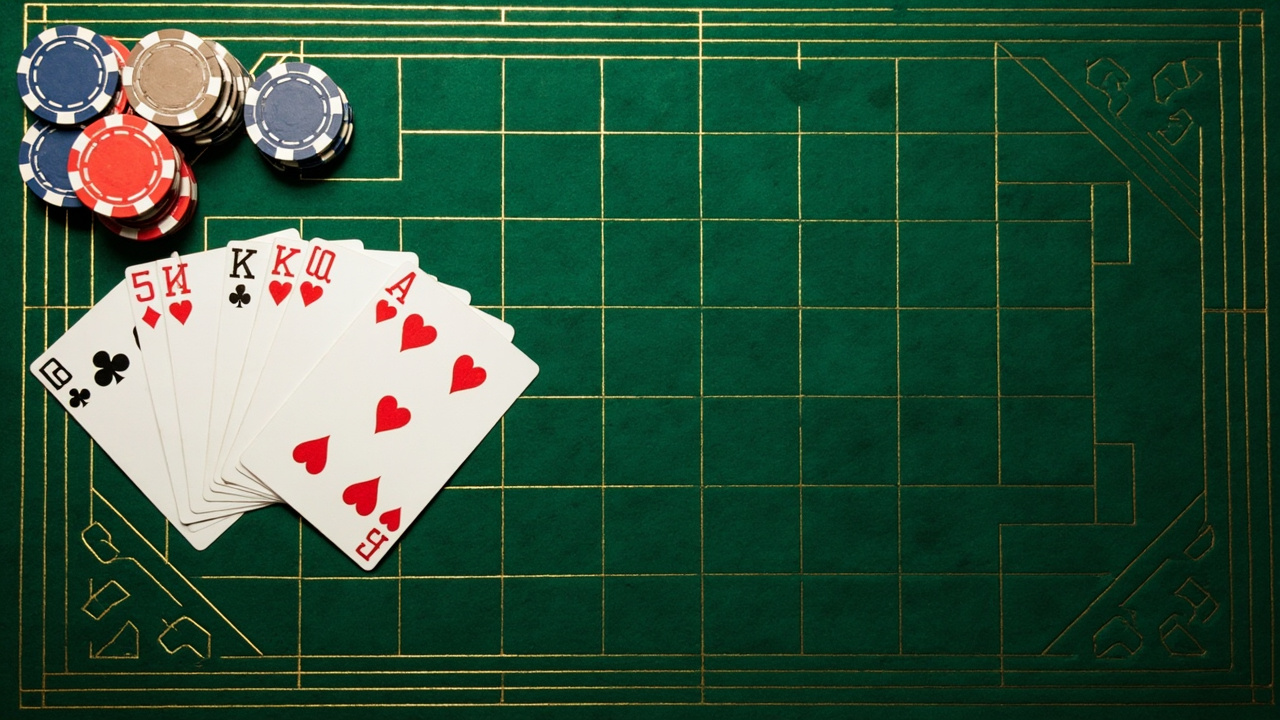
Basic strategy assumes a fresh shoe with roughly neutral composition. Once low cards deplete, the remaining deck skews tens-rich, which favours the player on double-downs and splits, while aces-and-lows remainder shifts the house edge. A deviation flips a basic-strategy decision only when the true count crosses a known threshold. Standing on 16 versus a ten is a loss at any negative count, yet becomes the correct play once the true count reaches roughly 0 or higher in an eight-deck game. Hard 12 against a four flips at about TC +3, 15 versus ten at TC +4, and 16 versus nine needs the count to clear roughly TC +5 before standing beats the hit.
The math behind the Illustrious 18 comes from full-deal simulation, comparing the expected value of the deviation against the next-best basic-strategy decision. Each index is a break-even point. Below the index, the standard play holds; above it, the deviation earns positive EV. From a slot-production standpoint, the same volatility-thinking applies: the expected value of any decision only matters when stake size and session length let the math breathe. Two-bet edges that vanish over a hundred hands carry more risk than a half-percent edge held across ten thousand shoes, and a thoughtful advantage player treats session bankroll the same way a designer treats RTP volatility.
What This Means for Australians
Aussies playing at regulated venues or licensed online products should treat deviations as a sharper tool inside a disciplined framework, not a shortcut. The count must be tracked at every dealt card, and deviations only fire when the true count clears the published index. Recreational players who don’t count should ignore this layer entirely. The variation in six-deck shoes found in many live-dealer lobbies demands shallower penetrations before reshuffling, which compresses the value of the most aggressive deviations and pushes bankroll management into the front seat.
| Deviation | Basic Strategy | Index (8-deck) | Direction |
|---|---|---|---|
| 16 vs 10 | Hit | TC 0 | Stand |
| 12 vs 4 | Hit | TC +3 | Stand |
| 15 vs 10 | Hit | TC +4 | Stand |
| 16 vs 9 | Hit | TC +5 | Stand |
| 10 vs 10 | Hit | TC +4 | Double |
A few natural touches on the local side: reckon on the count before each round, and keep the session clock visible so the arvo doesn’t disappear. A short list for any deviation player is worth committing to memory: true count over running count, index over instinct, bankroll over ego, and patience over progression. Australian authorities do not permit offshore online play, so the same discipline applies to the licensed product on offer locally, and geo-blocks or document checks at sign-up are not obstacles to bypass.
The Lobby Test for Deviation Play
The product question is whether a real-money online lobby supports the conditions that make deviations worth running. Penetration is the headline, and most shoes in a regulated online environment reshuffle at 50% or earlier, which kneecaps the high-count tail where the strongest deviations earn their keep. The deck count and table rules still need reading carefully: eight decks with dealer-stands-on-soft-17, late surrender, and double-after-split all reduce the house baseline, leaving the deviation edge on top of an already thinner margin. Search and discovery should expose the live-dealer table settings, including the reshuffle point, the cut-card placement, and any mid-shoe prompts, because a player running the count is hunting for the closest match to a six-deck shoe with 4.5-5 out of 6 dealt before reshuffle.
Provider mix matters more than the marketing copy. Studios running a fixed random number generator, a streamed studio with automated shufflers, or a live-dealer product dealing from a shoe each give different deviation ceilings. A studio-grade product with visible cut card and consistent dealing cadence, paired with late surrender and DAS, is the right target. The player who chases deviation value inside a lobby built for fast-spinning slots will be looking for hours, and the catalogue will feel thin even when it is technically full. Mobile is a real concern because card-counting apps that overlay the screen usually breach operator terms, so the count has to be kept in the head or on paper, which favours a quieter, single-hand session on a tablet or desktop rather than a phone squeezed in on the bus. luckyelf casino no deposit bonus
Bankroll, Risk, and Honest Verdict
A deviation player’s expected return per hundred hands at a TC +1 or higher is genuinely positive, but the variance between shoes is wide, and short sessions can run hot or cold enough to wipe a few days of positive expectation. A bankroll measured in hundreds of units, not hundreds of dollars, is the honest entry point, and the unit size should be small enough that a sustained downswing does not force a tilt. From a math-design perspective, this is the same risk modelling a high-volatility slot requires: the long-run RTP is honest, but the path is rough, and only a bankroll built for the variance survives the trip.
Verdict: blackjack basic strategy deviations earn their keep for a patient, Australian adult who can count cleanly, keep the Illustrious 18 in working memory, and sit at a table or live-dealer lobby that offers deep penetration, late surrender, and DAS. For everyone else, perfect basic strategy and flat stakes are the smarter baseline. As a side note, Tasmania’s long-running Federal Group monopoly on pokies statewide shows how a single-operator licence shapes the local product mix, and harness racing pacers and trotters share the same rulebook logic: a tighter gait restriction trims the field but never removes variance. Worth a look for the right player, otherwise stick to standard strategy and let the count be tomorrow’s project.